Garden & Outdoor
The 3 Best Grow Lights of 2026, Tested by SAVEN
Good light is the difference between leggy, pale seedlings and compact, vigorous plants. We compared panel lights, strip lights, and design-friendly options on spectrum, efficiency, and how evenly they spread light across a canopy.
The right choice depends on your setup: a flowering tent needs a powerful full-spectrum panel, while a kitchen herb shelf needs something slim and linkable. Every pick below uses full-spectrum LEDs that support plants from seedling through harvest, and all of them run far cooler and cheaper than the grow lights of a decade ago.
Our Top Picks
- Spider Farmer SF1000 — Best Overall
- Mars Hydro TS1000 — Best Value
- Viparspectra P1500 — Best for Grow Tents
1. Spider Farmer SF1000
Best Overall
SAVEN Score: 4.7 / 5
The SF1000 is the panel we recommend first for a small tent or a single shelf of demanding plants. It uses high-efficiency Samsung diodes on a slim aluminum board, which means more of the electricity you pay for becomes light plants can use rather than heat. The built-in dimmer knob is a small thing that matters daily — seedlings want gentle light, flowering plants want everything the panel has, and you can move between the two without raising or lowering the fixture. Coverage is honest for a 2-by-2-foot flowering footprint. It runs silently with no fan, and the build quality feels a step above the budget boards it competes with.
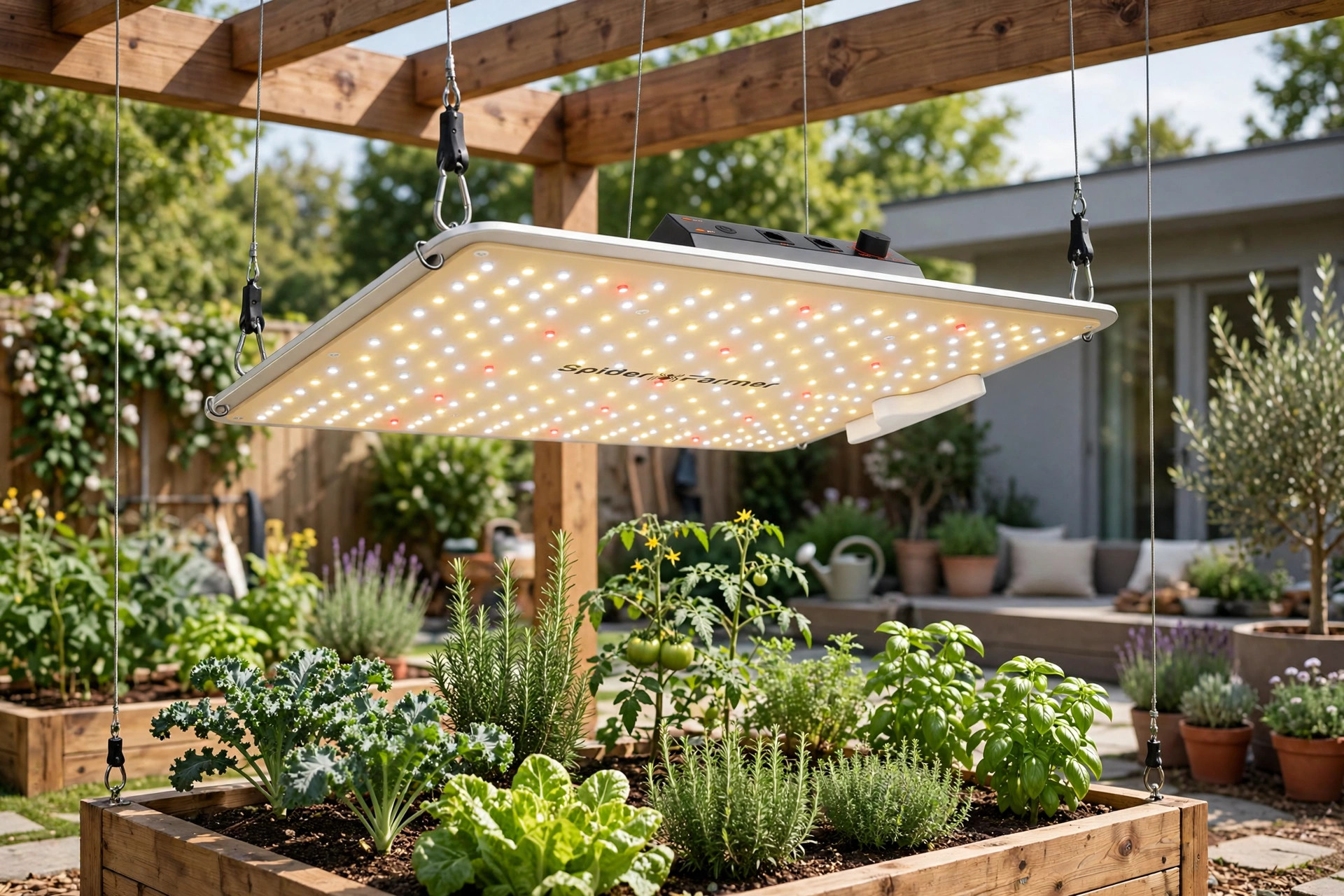
- Full-spectrum panel, about 100W draw
- Samsung LM301 series diodes
- Built-in dimming knob, fanless design
What we like
- Excellent efficiency for its class
- Smooth dimming for each growth stage
What to consider
- Costs more than entry-level panels
- Best suited to small growing areas
2. Mars Hydro TS1000
Best Value
SAVEN Score: 4.6 / 5
The TS1000 has been a first grow light for a huge number of indoor gardeners, and it stays on our list because the price-to-output ratio is hard to beat. Drawing roughly 150 watts, it covers a 2-by-2-foot flowering area or a larger vegetative space, and its reflective hood design helps push light toward the edges of the canopy instead of wasting it. Dimming is handled by a knob, and multiple units can be daisy-chained so a growing tent stays on one timer and one control. It is not the most efficient panel here, and the finish is utilitarian, but as a way to get serious light over real plants without a serious bill, it stands out.
- Full-spectrum panel, about 150W draw
- Daisy-chain dimming across units
- Suited to roughly 2x2 ft flowering coverage
What we like
- Strong output for the price
- Easy multi-light expansion
What to consider
- Runs warmer than premium panels
- Basic housing and finish
3. Viparspectra P1500
Best for Grow Tents
SAVEN Score: 4.6 / 5
The P1500 is built squarely for tent growers: a compact panel with a dimmer, daisy-chain support, and a spectrum tuned to carry plants from veg through flower under one fixture. Its aluminum housing doubles as a heat sink, so it runs without a fan and without the hum that cheaper lights add to a quiet room. We look for even spread in tent lights, because hot spots in the middle and dim corners waste the whole point of an enclosed, reflective space — the P1500's diode layout does a respectable job of keeping the footprint uniform. For a 2-by-2 or slightly larger tent, it is a tidy, capable centerpiece.
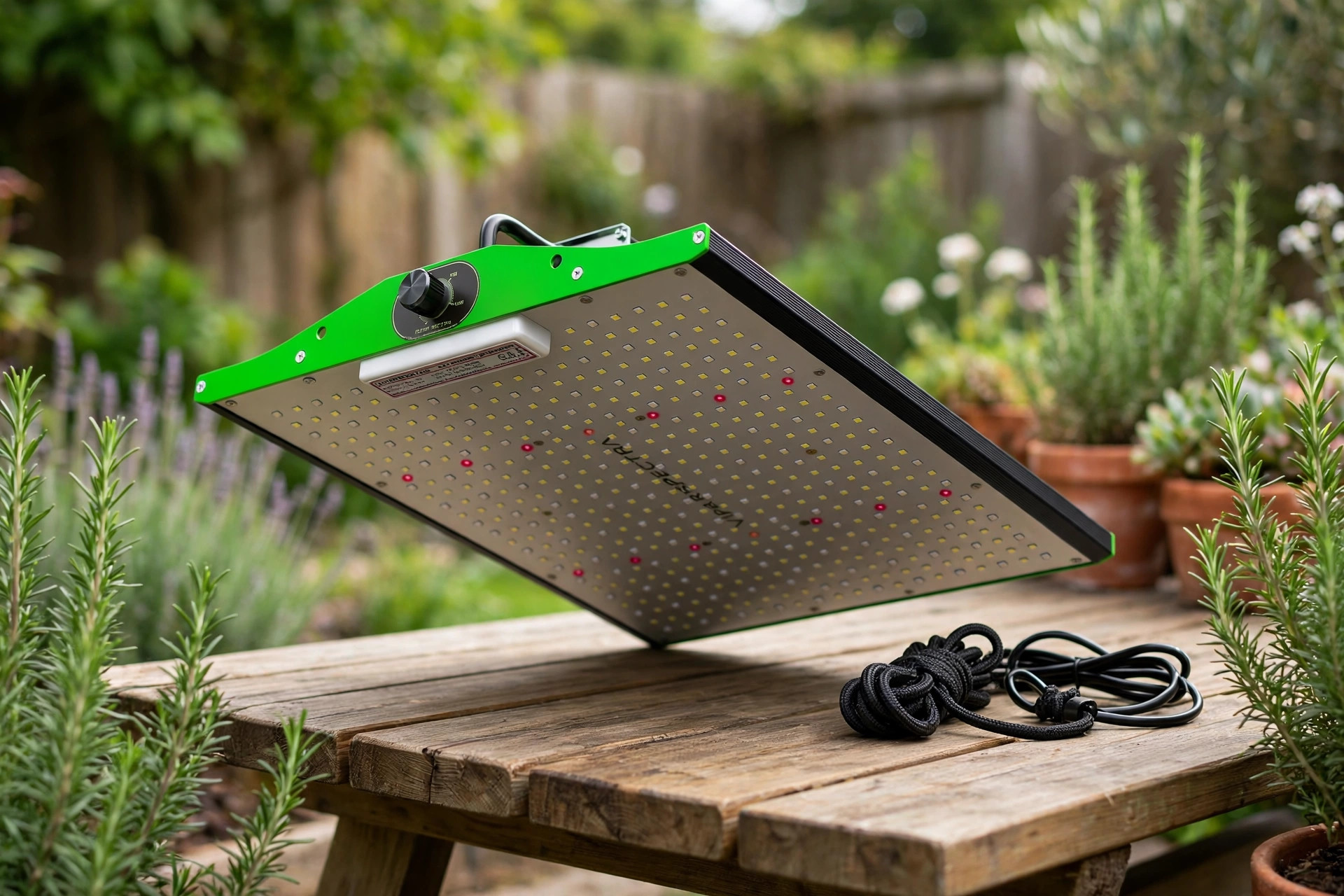
- Full-spectrum panel, about 150W draw
- Dimmer with daisy-chain support
- Fanless aluminum heat-sink housing
What we like
- Quiet, fanless operation
- Even light across a small tent
What to consider
- Less efficient than the class leaders
- Hanging hardware is basic
What to Look For in a Grow Light
Focus on useful light, not headline wattage. What plants respond to is the intensity reaching the leaves — often discussed as PAR or PPFD — and reputable makers publish coverage maps showing intensity across a footprint. Match the light's honest coverage area to your space rather than stretching one panel over too many plants. Spectrum matters next: full-spectrum white LEDs support every growth stage and are pleasant to live with, while older purple lights are harder on the eyes for similar results. Dimming is worth having, since seedlings need a fraction of what flowering plants want. Finally, consider heat and efficiency together — efficient diodes produce more light per watt and less warmth to vent away, which matters in enclosed tents and cabinets.
Frequently Asked Questions
How many hours a day should grow lights run?
Most vegetables and flowering plants do well with 14 to 18 hours during active growth, while many houseplants are happy with 10 to 12. A simple outlet timer keeps the schedule consistent, and plants benefit from a real dark period each night.
How far should the light be from my plants?
Panels typically hang 12 to 24 inches above the canopy, adjusted for intensity and dimmer setting; strips and bulbs sit closer, often 4 to 12 inches. If seedlings stretch tall and pale, the light is too far or too weak — move it closer before adding hours.
Can regular LED bulbs replace grow lights?
Bright household LEDs can keep low-light houseplants alive, but dedicated grow lights deliver higher intensity and a spectrum weighted for plant growth. For herbs, seedlings, or anything you want to harvest, a proper grow light is worth it.